Mike Takes Rafo North
Cry MachoMike Takes Rafo North is a forced departure that becomes, through argument and resistance, a tentative choice. Mike tells Rafo plainly that he intends to kidnap him, but the scene gradually reveals that the boy is not indifferent to the father he disowns: beneath his streetwise suspicion is a hope that his father might still want him. The departure begins without resolving the strain between them. Rafo goes north with Mike, but in the back of the truck, alongside Macho, rather than as a willing passenger welcomed beside him.
The proposition and its purpose
The first negotiations take place at an outdoor table at a shabby café near closing time. Mike and Rafo sit apart in their attitudes as well as their circumstances: the rooster’s leg is tied to a rung of Mike’s chair, while Rafo watches both the bird and the man who has brought him there. When Rafo asks whether Mike is really going to kidnap him, Mike confirms it. The blunt answer makes the coercive nature of the plan explicit instead of disguising it as an ordinary journey.
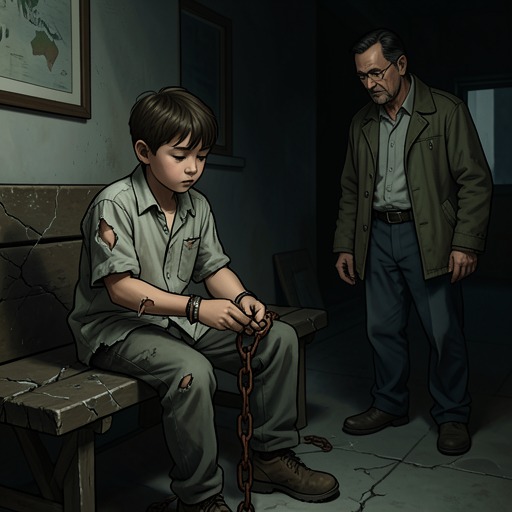
Rafo tests the practical logic of the abduction. He assumes Mike expects a ransom, then argues that his mother would not pay one and might send his clothes instead. The exchange establishes Rafo’s expectation of rejection within his family, as well as his quick, skeptical way of assessing what is being asked of him. Mike’s answer shifts the proposed source of money from his mother to his father. When Rafo asks who that could be, Mike repeats that his father will pay, more than a peso. The prospect changes the conversation: the father is not merely a name attached to an arrangement but the possibility on which Mike is asking Rafo to act.
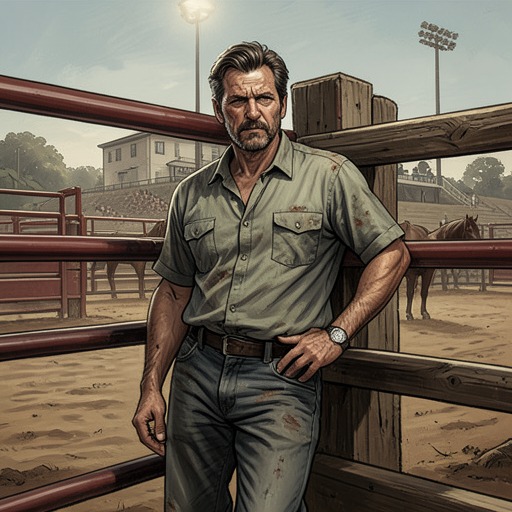
Mike tries to make that possibility concrete by telling Rafo that his father wants him to live there again. Rafo’s first response is defiance, insisting that he no longer needs his father and can manage by making or stealing a few pesos. Yet he does not leave the table. After deciding that he will not go, he remains there, uncertain, and asks whether his father still has a rodeo. That question redirects the encounter. The father’s promised rodeo belongs to an earlier expectation Rafo remembers as having been broken: as a little boy, he had been told he would be taken there, but it never happened. Mike answers that the promise is being fulfilled late, and urges Rafo to regard his father as more than a liar.
Hope, conditions, and resistance
The emotional center of the negotiation arrives when Rafo asks whether his father wants him. Mike answers that Rafo is his father’s only child. The response offers a reason for hope, but it does not erase Rafo’s caution. He sets a condition of his own: if he dislikes life there, he will leave and come back. Mike accepts the stated possibility rather than demanding that Rafo promise permanent loyalty. Their exchange therefore produces neither reconciliation nor trust in the father; it produces a limited agreement to try.
That agreement remains incomplete because Rafo’s attachment to Macho is inseparable from the decision to leave. When Mike objects to putting the rooster loose in the back of the truck, Rafo rejects the implication that Macho is an interchangeable chicken. He explains that the bird was once frightened, injured, and dismissed by others; Rafo lifted him up, cared for him, and urged him to fight. Macho’s name, in Rafo’s account, marks the change from weakness to a champion’s identity. His defense of the rooster also exposes something about Rafo himself: he recognizes a creature that has been treated as worthless and insists on the value he helped it acquire. Taking Rafo north therefore means taking Macho too, not treating the bird as disposable baggage.
When Mike tries to put Macho in a small coop, Rafo breaks it rather than surrender the rooster. The confrontation escalates into a physical struggle as each tries to control the bird and the situation. The coop is smashed, Macho gets loose, and Mike and Rafo struggle over him. This episode shows the limits of persuasion: Mike has explained the journey and Rafo has asked questions about his father, but the boy will not accept a plan that separates him from the companion he has protected. The clash does not settle the dispute by itself. Instead, it brings Rafo’s resistance and his desire to leave into sharper view.
The decision and departure
The decisive change comes after Mike tells Rafo that he can stay and that his father will be told he refused to go. Rafo answers that he wants to go to his father. The declaration surprises Mike and, as the narration makes clear, Rafo himself; it is not a calculated bargaining position but a disclosure he had not meant to make. His earlier contempt and insistence that he needs nobody have not vanished, but they no longer conceal the wish that his father might accept him. That wish explains why the prospect of the rodeo, and the possibility of being wanted, has kept him at the table even after he said no.
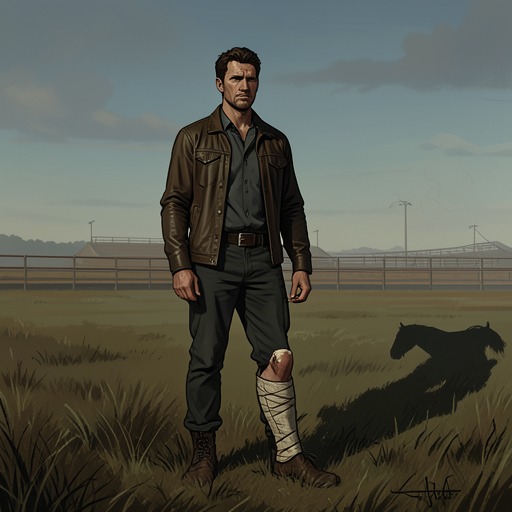
Mike responds with an order rather than a fresh appeal: Rafo is to tie Macho and get into the back of the truck. He does not invite the boy to sit beside him in front. The arrangement preserves the distance between them even as it makes departure possible. Mike goes to the front without looking back; Rafo remains still for a moment, then makes a slipknot in the cord, ties it to Macho’s leg, lifts the rooster into the truck, and climbs in after him. The truck starts before Rafo has shut the second door. The sequence is abrupt, but its decisive action belongs to Rafo as well as Mike: he takes the cord, secures the rooster, and gets into the vehicle after openly saying that he wants his father.
What the departure sets in motion
The first image of the journey is not shared conversation but separation. Rafo rides in the truck’s back with Macho, nursing his anger at having lost the struggle. He recalls that he had been living alone in the city’s alleys for two years and had thought of himself as quick and capable enough to avoid being controlled. His resentment shows that going north has not converted him into a trusting or obedient son. He has agreed to travel, but he continues to understand the encounter through pride, independence, and the immediate defeat he has suffered.
Later events give the departure a further meaning without making its initial conflict disappear. When Mike jumps onto a white mustang, Rafo watches the man hold on and feels pride in him; he privately associates Mike with the quality he had given Macho’s name. The reversal matters because the journey began with Rafo treating Mike as an adversary and a kidnapper. It suggests a developing respect, not a sudden erasure of their unequal position. Likewise, Rafo’s later attachment to the language of strength stands beside Mike’s increasingly troubled view of the violence celebrated in arenas. After seeing Macho fight, Mike connects the spectacle of animal combat with the arena culture in which men seek to prove their courage through domination. These later reflections place the departure within the novel’s wider scrutiny of macho ideals: the trip begins through force, but its human possibility lies in care, vulnerability, and the boy’s still-unextinguished longing for his father.